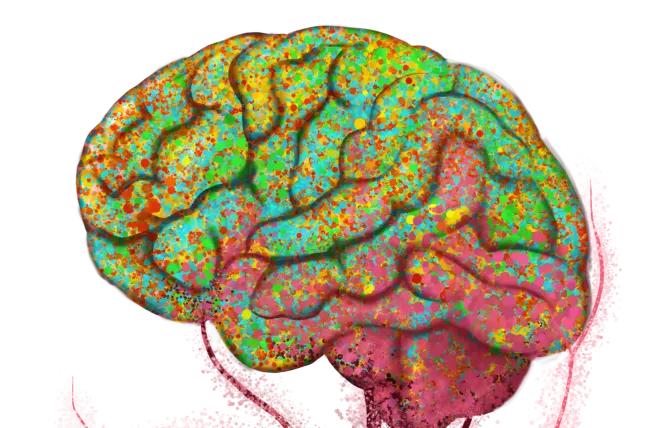
The discovery from an unusual team of computer scientists and pathologists overturns longstanding dogma – and could point the way toward new therapies for neurodegenerative disease
In which anesthesiologist Martin Angst shares how studying the biology of recovery may reveal why some aging brains withstand stress while others quietly unravel.
Research from the Giocomo lab finds that mice create neural maps of the location of rewards, distinct from the well-known hippocampal maps of an animal's location in space.
In which Anthony Wagner and Beth Mormino share what they are learning from the Stanford Aging and Memory Study about the nature of healthy brain aging.
Why do our brains get worse at learning as we get older, and what can we do about it? Institute affiliate Carla Shatz discusses our brain's capacity for change on this podcast episode.
We are proud to welcome the 2024 Neurosciences Postdoctoral Scholars — ten young scientists pursuing novel, multi-disciplinary approaches to understanding the workings of the brain.
Erin Gibson’s lab has discovered that the precursor cells to myelin-producing oligodendrocytes are regulated by the circadian system in mice. When that regulation breaks down, the researchers saw abnormal myelination — but also fragmented sleep.
Katrin Andreasson discusses how immune cells can cause harmful brain inflammation and contribute to the development of neurodegenerative diseases like Alzheimer’s disease.